The Orville’s Missing Episode is Closer to Reality Than You Might Think
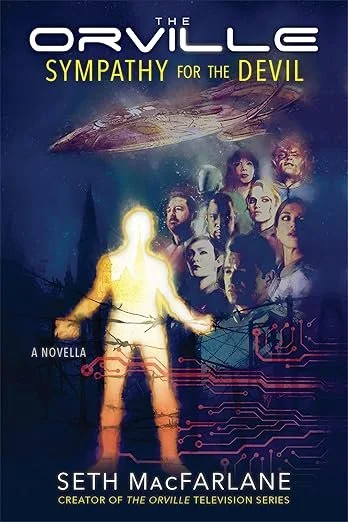
There was supposed to be another episode in Season 3 of The Orville. For whatever reason, the episode never came to pass. So, Seth MacFarlane turned it into a novella called Sympathy for the Devil.
A luxury hotel in New York City. A panicked mother handing her baby off to a hotel clerk. Then she disappears. When the woman doesn’t return, the baby ends up in the care of a couple staying in the hotel who have recently lost their own baby to typhoid. The couple is German. It’s April 1914. The child grows up in Germany in the 1920s and 30s.
Being a psychopath is one way someone could become a Nazi. Unfortunately, it’s not the only one. There are not, statistically, enough psychopaths in the world for that to explain what happened in Germany leading up to and during WWII. A normal person, particularly one feeling powerless or victimized, offered a path to agency and power can perform some amazing mental reasoning to justify doing terrible things.
Everyone takes part in motivated reasoning to some extent. If you think you’d never be able to talk yourself into dehumanizing other people, beware. It’s thinking you’re not doing it that’s dangerous. The best defence against motivated reasoning is knowing not that you might do it, but that you do it. Everyone does. All the time.
The same part of you that says: Yeah, I said I was going to stop snacking after supper, but my workout was fifteen minutes longer than usual today, so a few chips don’t really count.
Is also the part of you that says: So-and-so is (insert political affiliation, religion, race, or any other identifiable trait here), there’s no point in listening to what they have to say.
It isn’t far from here before you get to: So-and-so is (insert political affiliation, religion, race, or any other identifiable trait here) we have to get rid of them.
Sympathy for the Devil wrestles with this higher-stakes form of motivated reasoning. It explores some interesting moral questions too.
If you go through the actions of killing someone, and you think you killed someone, but it turns out in reality you didn’t, are you still guilty of murder? Can someone who has talked themselves into doing horrible things ever come back from that? To what extent were young SS soldiers making free decisions, and to what extent were they brainwashed? What does that mean for their guilt?
That’s not to say the ‘I was only following orders’ defence is a get out of jail free card. But you also have to consider what would happen to the person who disobeys that order. Lots of people claim they would face the firing squad before killing an innocent person under orders, but self preservation is a strong impulse. The reality is, most people in that moment of intense fear and helplessness would kill to save themselves.
Well, you might say, I am not ‘most people’. But…
What if you’d convinced yourself the person (or people) being killed wasn’t really innocent?
What if it wasn’t you facing the firing squad for disobedience, but your family?
What if you were only thirteen years old?
As naturally rebellious as teenagers are, it’s a selective rebellion. They rebel against parents, teachers, the generation that came before. At the same time, they can be willing to lie down in traffic for each other or any group they strongly identify with. They are still incredibly impressionable and easily manipulated by an authority figure who is able to channel their need to rebel in a given direction. It’s also possible to channel their fear or grief into a sense of injustice that calls for retribution.
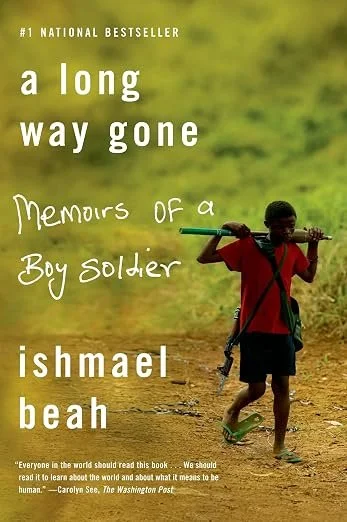
Years ago, I read the book A Long Way Gone: Memoirs of a Boy Soldier by Ishmael Beah. During the Sierra Leone Civil War (1991-2002) Ishmael was picked up by the Sierra Leone Army and turned into a soldier. He was thirteen. A normal thirteen year old, no more inclined toward violence than the next person.
Ishmael recounts how he and the other child soldiers were addicted to drugs, threatened, dehumanized, and how he found himself taking part in horrific actions. He also talks about how they were all taught to believe the rebels (the Revolutionary United Front) were to blame for all the violence, the killing of their family members, and everything else they had lost.
When Ishmael was sixteen, UNICEF got him out. He was brought to a rehabilitation center where there were other child soldiers, from both the government and rebel sides of the conflict. The kids (and they were kids) immediately started fighting, even killing, each other before the staff separated them.
The children picked up by the rebels and forced to fight had also been addicted to drugs, threatened, dehumanized. And they were taught to believe the government’s forces were to blame for all the violence, the killing of their family members, and everything else they had lost. Which side a kid was on was a question of which side happened to scoop them up first.
As it happened, I was on a boat off the coast of Sierra Leone when I read this book. Funny how things work out sometimes. Being so close to where it took place made it impossible to distance myself from the reality of Ishmael’s story. I tried to imagine myself at thirteen experiencing what he experienced. I don’t think I’d have fared well.
I don’t know if Seth MacFarlane ever read A Long Way Gone, but I could see some conceptual parallels in Sympathy for the Devil.
As much as I enjoyed the novella version, I wish this story had also come to fruition as an episode in The Orville. There were some downsides in taking what was intended to be a television episode and turning it into a novella.
For one thing, the Orville crew doesn’t show up until about halfway through the story. For the main characters not to make an immediate appearance works fine in a single episode of an already-established world, but it didn’t work as well in the novella.
When the crew does finally show up, their introduction is a bit unbalanced. Realizing there might be a few readers who haven’t watched the show, the novella flat out tells the reader the roles and personalities of everyone, without taking the time to show and develop the characters the way the show was able to do, or the way a full-length novel would have. As an episode where it could be assumed the audience knows these things already, these more clunky parts could have been left out.
Many of the cast are just sort of crammed in without much purpose. As an episode of the show it would make sense to have all of the established characters at the briefing or in the background whether they had much to do with that particular episode or not. Looking at the novella more like a stand alone, it comes off as a bit forced because there isn’t enough for the entire ensemble to do.
I still think Sympathy for the Devil can be read as a stand-alone story. The protagonist, Otto, is well developed, and the concept is good and worth pondering. For The Orville fans in particular, it’s definitely worth a read.
As for A Long Way Gone, it’s a valuable lesson in humanity. Everyone should read it. Everyone should also keep in mind this is still happening to children around the world.